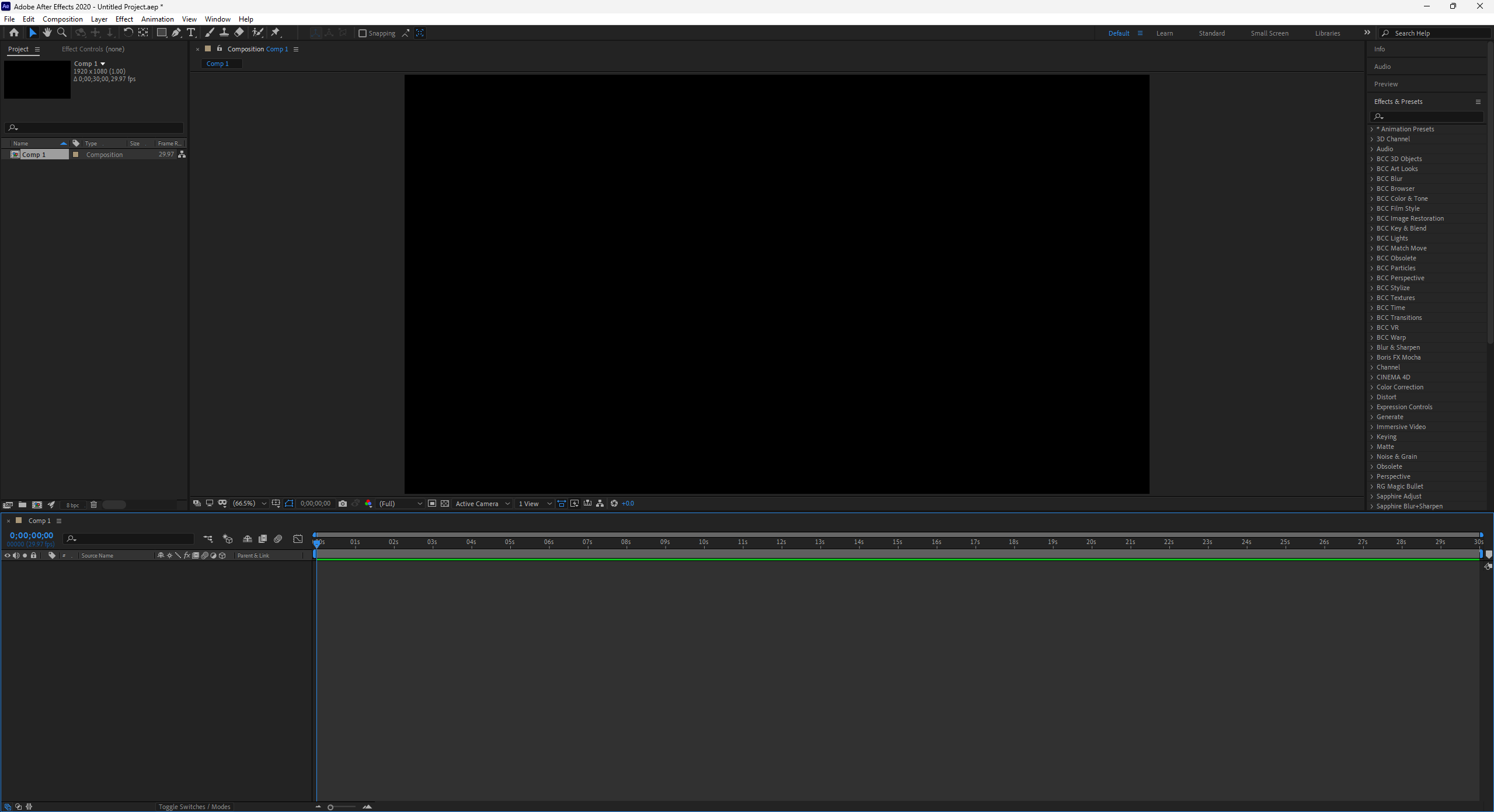
The Wikipedia definition of Adobe After Effects is: “a digital visual effects, motion graphics, and compositing application developed by Adobe Inc.; it is used for animation and in the post-production process of film making, video games and television production.” While the definition also states that it “also functions as a very basic non-linear editor [and] audio editor,” not much is stated about its ability to manipulate audio, or use it as a Digital Audio Workstation (DAW).
I’ve been using After Effects since I was a freshman in high school, making edits of (mostly) video games and other content that I would gather (family gatherings, friends hanging out, etc). Video creation in general has been a hobby of mine since middle school; it is a large creative outlet I have, and one I still use to this day. Despite having a visual creative outlet, I have always wanted to be creative musically, but this has not always panned out well. My musicality does not span very far – I took piano lessons for eight years, but it never really clicked; I was just doing as my mom wanted. My mom was often quite critical of my piano playing, and the things I created visually did not receive much praise; so I thought perhaps music would be another avenue that would receive some.
But because of this, music almost became a sort of spite of mine.
There have been times in the past where I attempted to create music, downloading a free DAW (namely LMMS), but I spent minimal time actually learning the tool. Unlike with After Effects, where I genuinely enjoyed the learning process, with music I mostly watched tutorials without putting forth an effort. My motivation for learning music production came from external validation – wanting to please others – rather than from my own intrinsic interest. When I struggled with LMMS, I blamed the tool instead of my approach, which led me to pirate professional software like FL Studio and Ableton Live. I convinced myself these higher-end DAWs would somehow make creativity easier, just as After Effects had come naturally to me. But this was just an excuse – the real issue was that I was afraid to invest time in something where I might not immediately succeed. Simply put, I was scared of not being naturally good at music creation, so I never gave myself the chance to truly learn.
The point of this preamble is to provide an explanation of my relationship with After Effects and music creation. Using the tool I have sunk hundreds of hours into to create something I have not before – something I have been scared to even attempt to create – serves as a great motivator behind this hack. To me, it is addressing a creative block and expanding the boundaries of the tool I’ve been using for over half a decade.
Because of this motivator, I drew many connections to Frank Chimero’s The Shape of Design, namely chapter three, “Improvisation and Limitations.” This creative block I faced reflects what Frank Chimero describes: “The creative process, like a good story, needs to start with a great leap of lightness, and that is only attainable through a suspension of disbelief.” My pursuit of music creation was weighed down by objectives – pleasing others, achieving immediate proficiency – rather than embracing the process itself. As Chimero suggests, I needed to “put those objectives in a drawer” to allow myself to begin to create.
What changed my approach was realizing that I could use these limitations as a baseline for my creation. In Chimero’s writing, he states: “Limitations allow us to get to work without having to wait for a muse to show up.” By choosing to create music within After Effects – a tool designed primarily for visual effects – I imposed a significant limitation on myself. This limitation became quite freeing rather than restrictive. Instead of facing the blank page of a professional DAW, I could work within the familiar environment of After Effects.
I found this similar to yet another example within Chimero’s work, particularly his discussion of Miles Davis. To summarize, Miles Davis made great contributions to jazz with his album Kind of Blue. Davis didn’t provide his musicians with fully formed compositions but rather gave them “a small slip of paper where he had written down a description of their part.” The musicians were constrained by these minimal instructions but freed to explore within those boundaries. Similarly, the limitation of using After Effects as a music creation tool provided both structure and freedom.
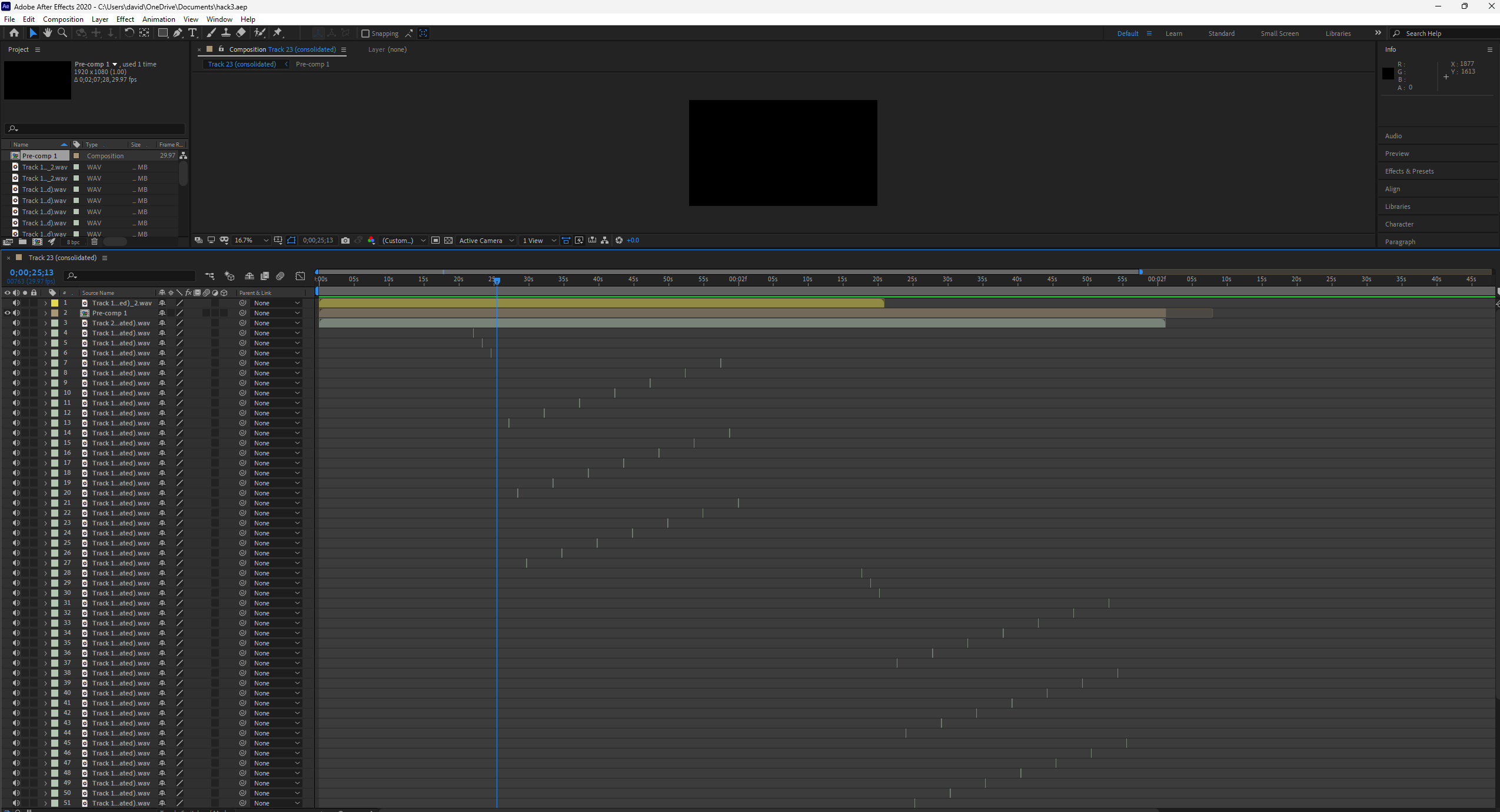
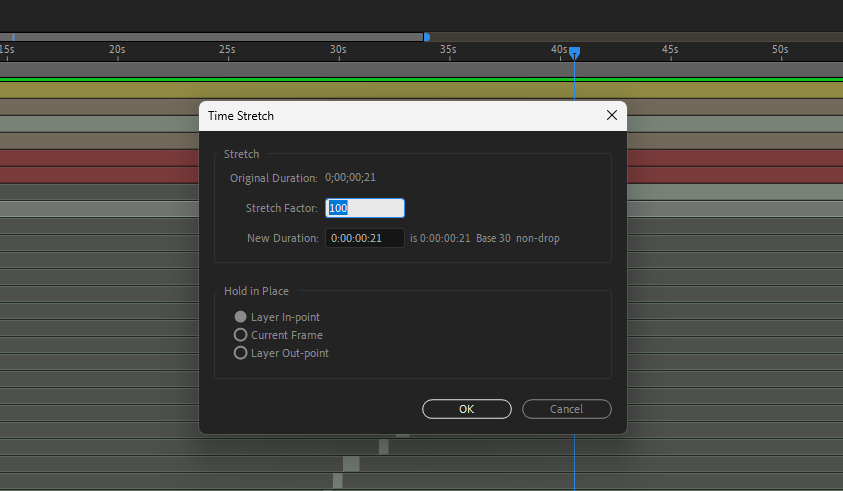
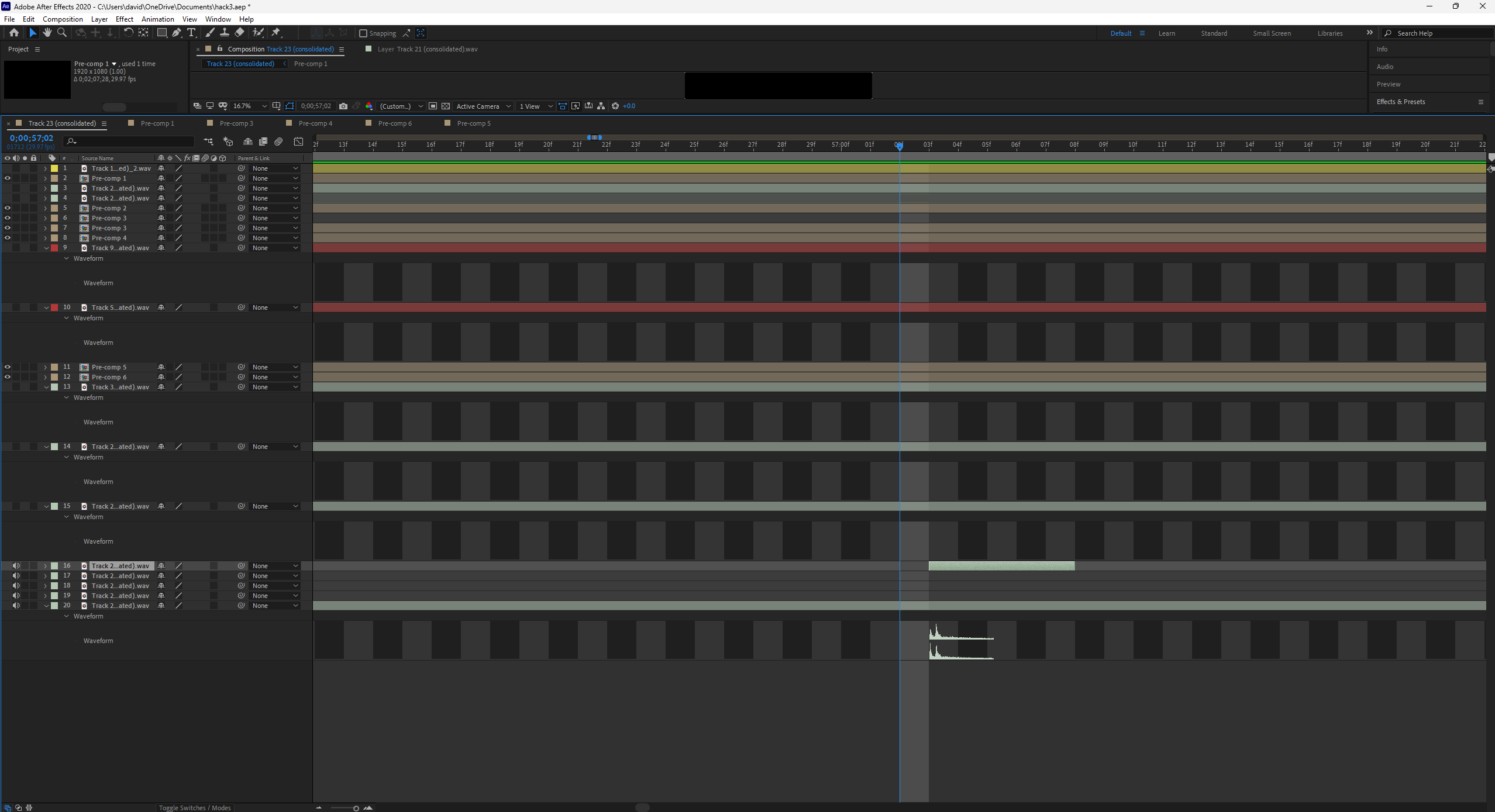
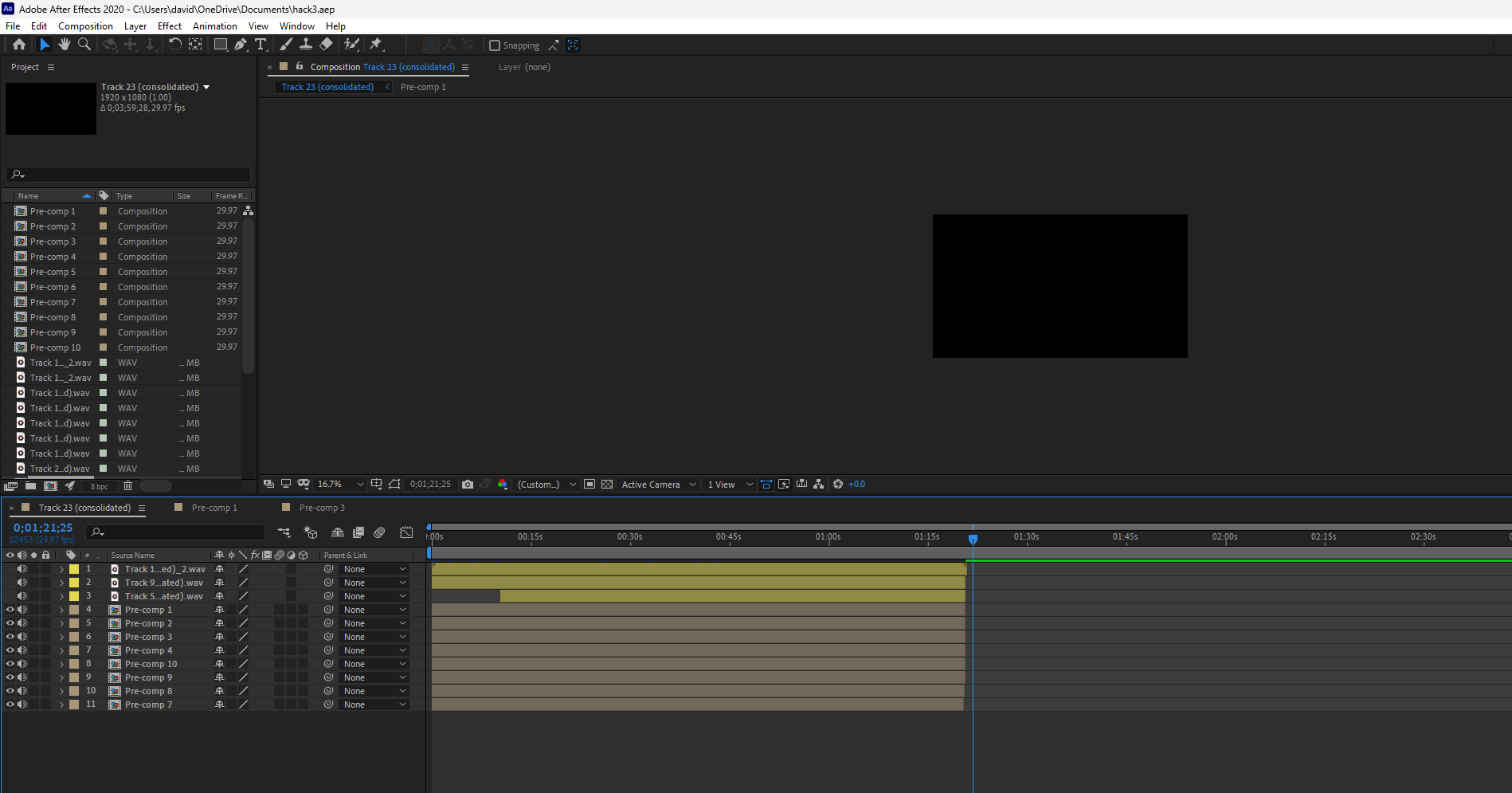
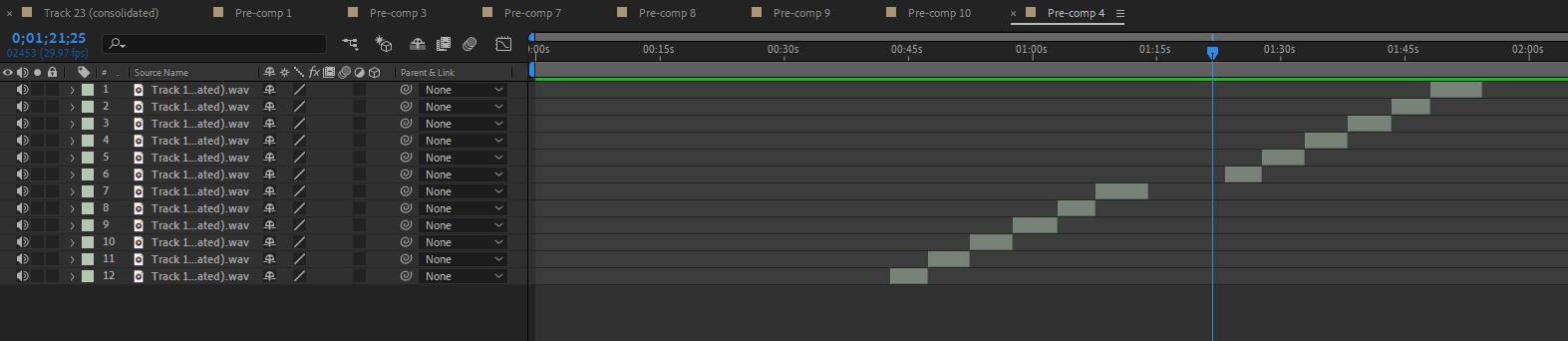
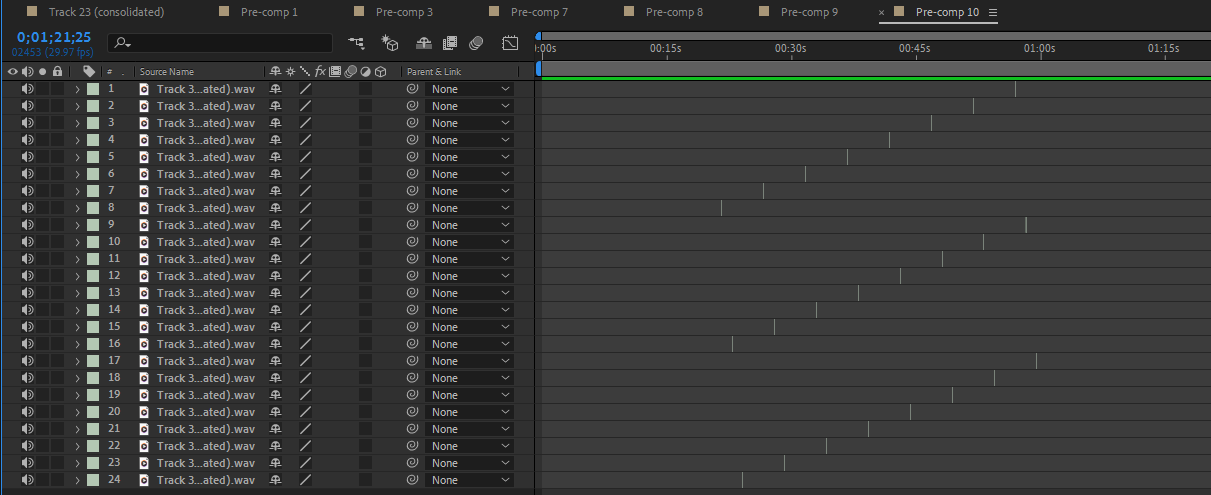
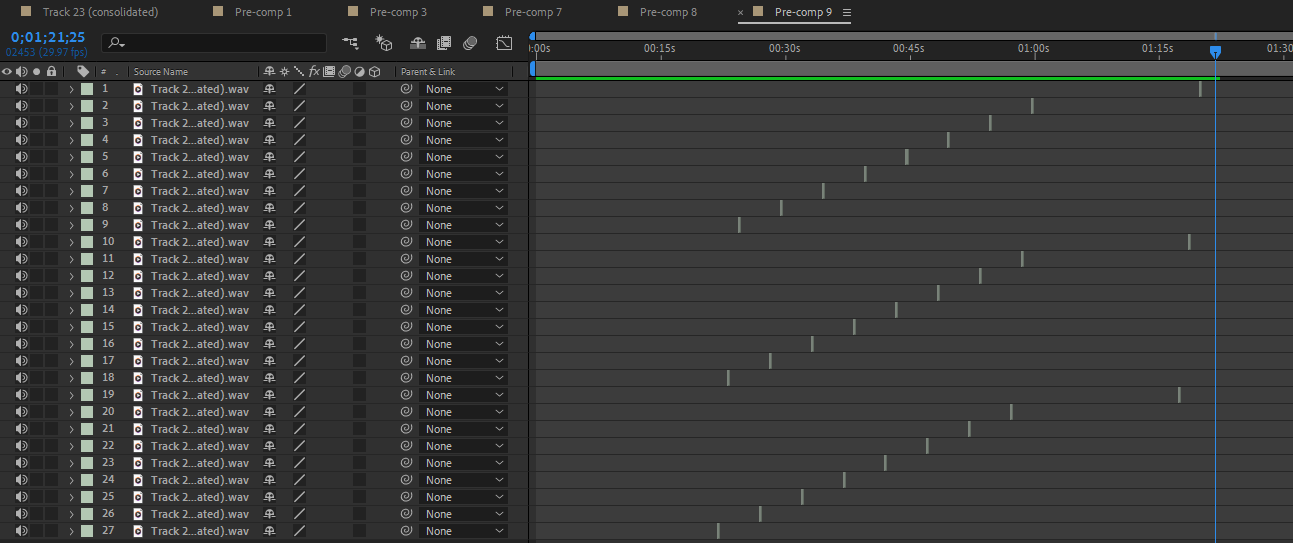
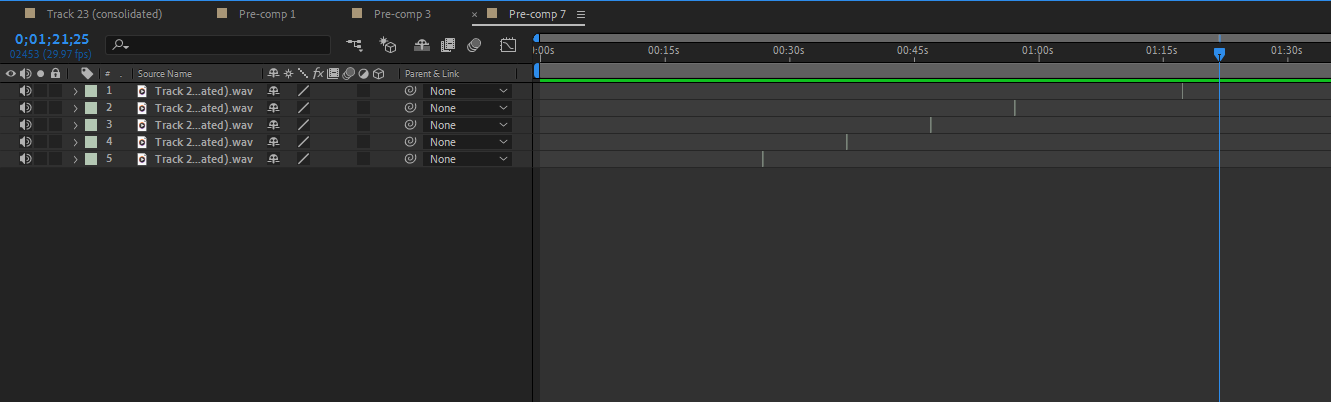
The “Yes, and…” principle of improvisation that Chimero discusses became prevalent in my process. I had to accept the limitations of After Effects’ audio capabilities and build upon them rather than fighting against them. For example, when I discovered that pitching audio was deemed impossible by Adobe forums, I used the “time stretch” feature to slow down the audio, then adjust the length of the audio selection, to form a sort of change in pitch. It felt that many limitations presented to me led to different sorts of solutions.
I feel as if the hack result embodies Yosa Buson’s haiku that Chimero references: “Lighting one candle with another candle – spring evening.” I’ve taken the light of my experience with After Effects and it has led me to a new creative outlet. This hack has taught me that creativity can also flourish by constraints, not be hindered by them. By using a tool “wrongly,” I’ve discovered new possibilities both in the software and in myself. As Chimero puts it, “The process and the limitations suggest the first few steps; after that, the motion of making carries us forward.” That forward motion has taken me beyond my creative block and opened up new avenues for creation, something I am constantly looking for.
The original sample used in this song was not created by me. It can be found here: https://www.youtube.com/watch?v=Ebqmk96YSGg.
“Adobe After Effects.” Wikipedia, The Free Encyclopedia, Wikimedia Foundation, https://en.wikipedia.org/wiki/Adobe_After_Effects.
Chimero, Frank. “Improvisation and Limitations.” The Shape of Design.
